
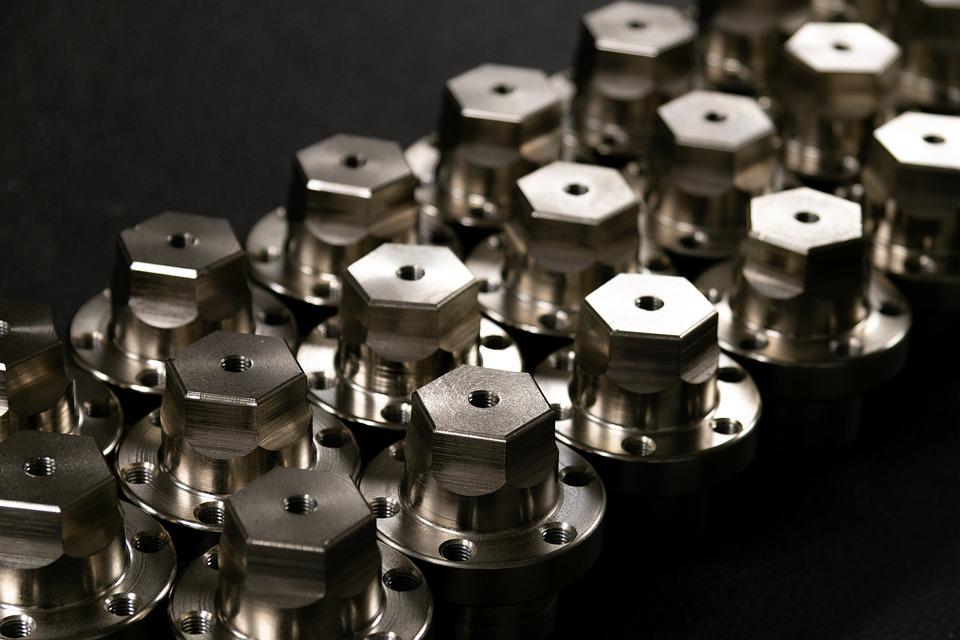
Precision engineering has taken turning to a new level, making it capable of producing precise, high-quality mechanical parts. The twin-spindle CNC lathe has played a big part in this.
Knowledge of materials, state-of-the-art machinery and control of every production step are fundamental to building precise, durable, high-quality components. Among the machines used by the best precision engineering companies are CNC machines.
Essentially, CNC machines receive input from software containing the machining information (type of operation, number of parts, size, material and so on). CNC technology guides the machine in producing what is required quickly and accurately, again and again.
What is a twin-spindle CNC lathe?
Precision engineering can use various types of lathe, machines that shape a rotating component. Broadly speaking, the material is clamped in a spindle and rotated while a cutting tool gives the component its shape and features, and the chips are removed.
There are various types of lathe, from the sliding-headstock lathe to the twin-spindle CNC lathe, each with its own way of working. Every CNC lathe works differently from a manual lathe and is suited to simplified, standardised turning.
Pistons, cylinders, pins and other mechanical parts: there is nothing precision engineering cannot produce with the various CNC lathes. One of the most widely used is the twin-spindle CNC lathe, a machine that quickly produces highly precise parts for many industries (e.g. the agricultural sector).
CNC lathe with twin spindles: how it works
A “twin-spindle CNC lathe” is simply a CNC lathe with two spindles, combining the advantages of numerical control with those of two-spindle machining. It has a main spindle (the one used most) and a sub-spindle (facing the main spindle), identical in workability and size but not in power.
When is this CNC lathe used? The twin spindles, combined with Y and C axes, are used to machine parts on both faces with both axial and radial movement. The CNC twin-spindle lathe can machine the front and back of the component.
Essentially, the twin-spindle CNC lathe avoids handling the part multiple times and reduces idle and machining times. The CNC turning centre uses this approach to increase the precision and quality of the final component and fully meet every requirement. T.M.G. operates twin-spindle CNC lathes for diameters from 20 to 100 mm: see our machinery.