
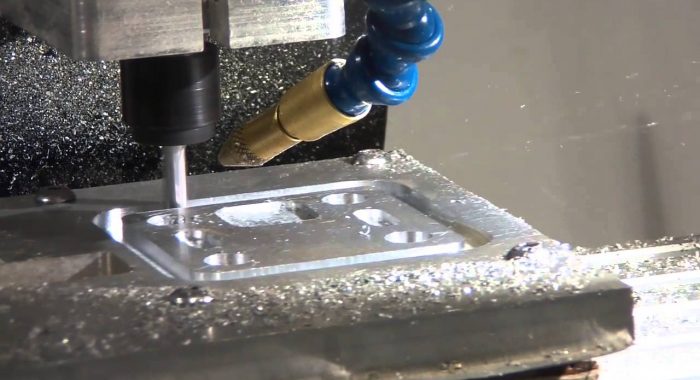
First of all, milling is the manufacturing process in which machines use rotating cutting tools to remove material from a workpiece.
CNC milling, by contrast, is a form of computer numerically controlled machining in which programs are used to set and control how the machine operates. CNC mills have become the most widespread thanks to their automation.
These machines are distinguished by the number of axes their programs control: the more axes, the greater the capability. The X and Y axes represent horizontal movement across the workpiece (front-to-back and side-to-side) on a flat table. The Z axis is vertical movement, up and down, while additional rotary axes allow the tool or the part to tilt and rotate.
Today CNC machining centres use advanced 5-axis machines running computer-aided manufacturing programs for excellent performance. These machines can produce shapes and sizes that manual machines cannot. Being able to machine at wide angles and on multiple faces in one set-up is a further advantage of CNC milling machines.
The rigidity and strength of the workpiece and the cutting tool must be taken into account, depending on the intensity and precision of the process.