
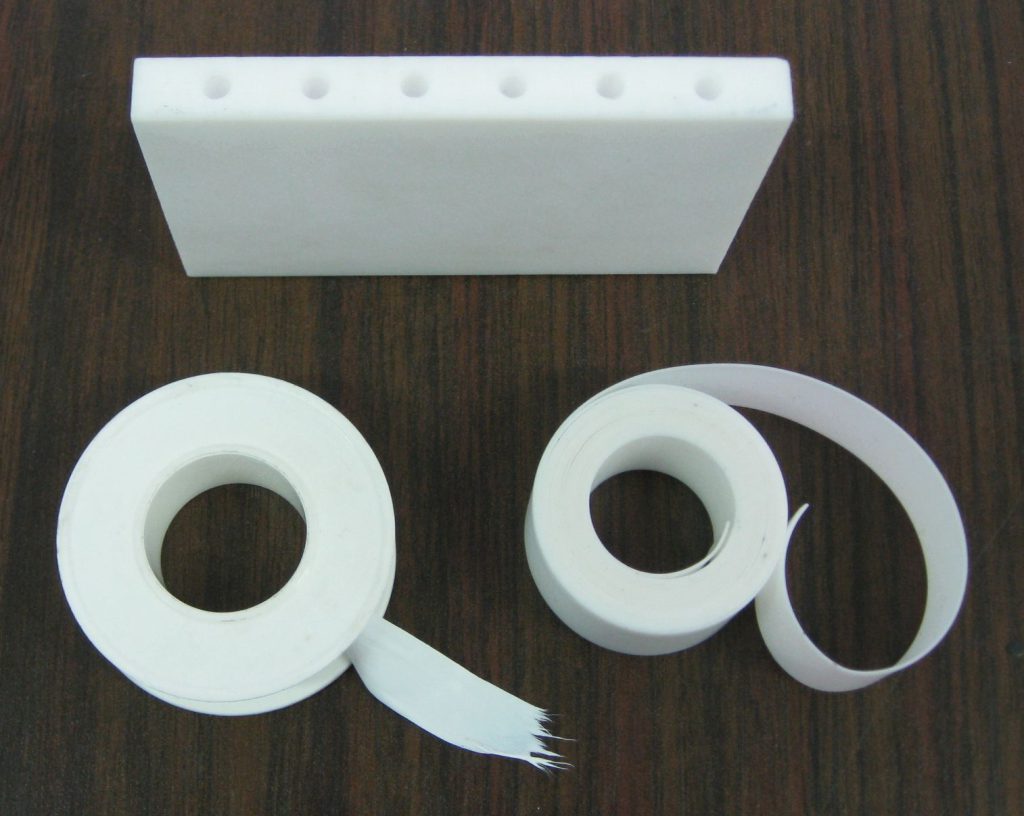
You’ve surely heard of it, and many of your kitchen utensils are made with it: Teflon (PTFE) is king in our homes, above all because of its remarkable resistance and its tendency to last a very long time. Widely used to coat non-stick pots and pans, PTFE is also often found in seals, filters, valves and anti-corrosion, non-stick protective parts. It is not only very resistant but also quite easy to work, so machining it on a lathe is not particularly difficult. PTFE turning is in fact very common, as long as certain precautions are followed to keep the process safe and avoid damage during machining.
Before turning PTFE, make sure the tools are sharp. Then pay close attention to the chips produced, because they can get caught inside the machine and affect how it works (or simply stick to your hands and make further handling awkward). PTFE turning generally uses the same tools used for metals: but since it is a plastic, PTFE simply needs a little extra care to prevent the material from being damaged during machining.
Turning is an increasingly common process because it is easy, practical, relatively inexpensive and can produce excellent results in very little time.