
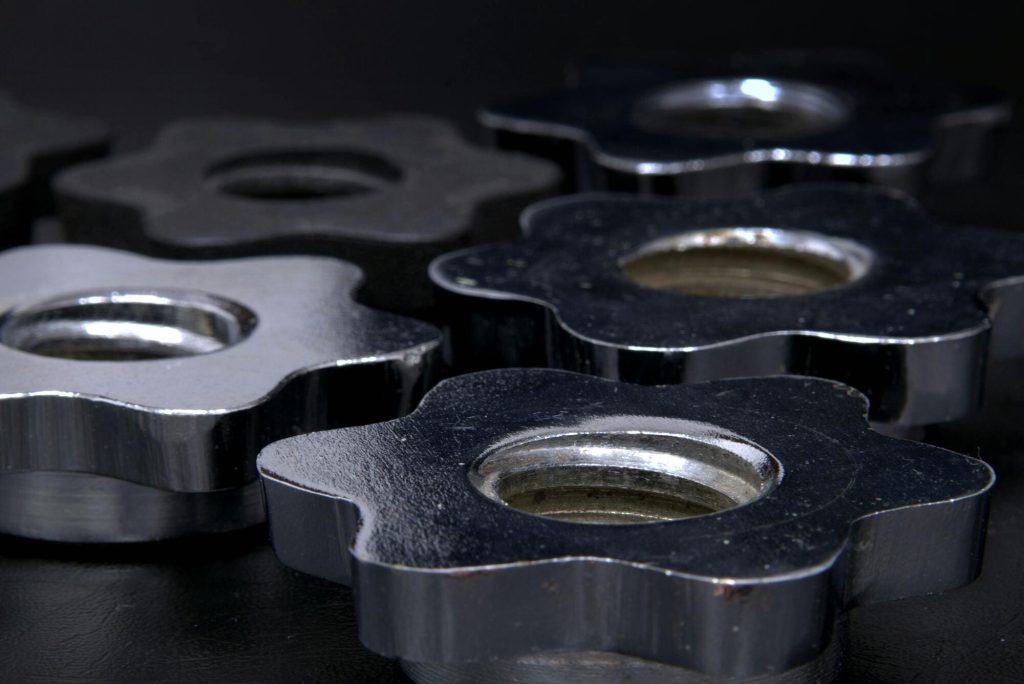
If you are looking for important materials for steel machining, stainless steels are an excellent choice. Thanks to their exceptional corrosion resistance, they are particularly suitable for highly reliable mechanical components and ideal for applications involving aggressive agents such as acids, bases and salts. In this article we take an in-depth look at the different types of stainless steel used in precision machining and the most common production processes.
Main types of stainless steel
Stainless steels are metal alloys made mainly of iron, chromium and other elements such as nickel and molybdenum. In steel machining, the main stainless grades include:
- 1.4301 | AISI 304: commonly used for highly reliable mechanical parts such as pipes, valves and components for chemical and food plants.
- 1.4305 | AISI 303: known for its machinability and corrosion resistance, it is often used for high-precision mechanical parts such as gears.
- 1.4401 | AISI 316: a high-quality grade suited to parts that must withstand critical conditions such as saline environments and high temperatures. It is commonly used in the marine and chemical industries.
- 1.4028 | AISI 420B: known for its hardness and wear resistance, it is ideal for blades, knives and other cutting tools.
- 1.4057 | AISI 431: a high-quality grade for mechanical components that are difficult to machine but require high resistance to corrosion and fatigue.
Main machining processes for stainless steel
The main processes for stainless steel include:
- Steel turning: a fundamental process for producing cylindrical shapes and smooth surfaces, used for precise mechanical components.
- Steel milling: used to remove excess material and create complex shapes and profiles, with tight tolerances and quality surface finishes.
- Stainless steel assembly: a critical process that joins several stainless steel components, ensuring the stability and reliability of finished products.
Stainless steel production involves several processes, including forging, melting, casting, drawing, rolling and extrusion. The choice depends on the requirements and performance needed from the parts. Each process has advantages and disadvantages that affect cost, lead time and product quality.
Choosing stainless steels for precision machining
The most suitable stainless steel for steel machining depends on the performance required of the parts and the production processes best suited to achieve it. Corrosion resistance and machinability are key factors in the decision. Choosing the right processes ensures a perfect result, with high quality, durability and strength in everyday use. See the stainless steel grades we machine.