
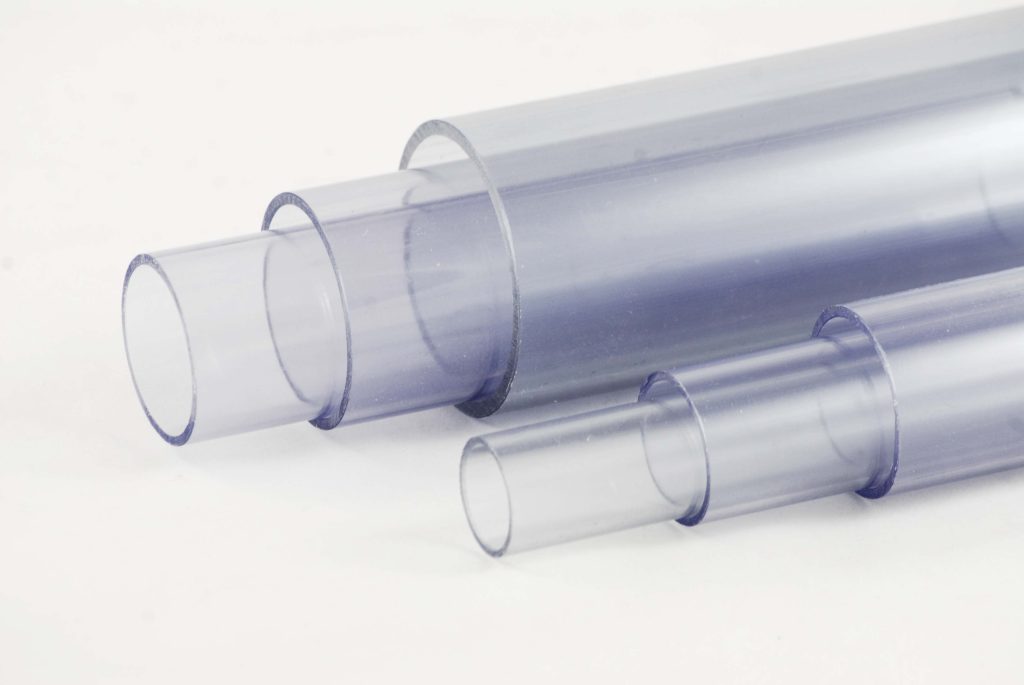
Plastics are real assets for companies specialising in mechanical parts. Why and when is PVC chosen in precision engineering?
Machining Teflon to produce parts such as rings, pins or bushes is just one example of plastics machining. Teflon is a plastic widely used by precision engineering experts, but it is not the only one. PVC has also earned a place of honour.
Why use PVC in precision engineering?
In-depth knowledge of materials makes it possible to choose the one best suited to specific needs. Not just stainless steel: in recent years precision engineering has re-evaluated other materials, including plastics such as PVC. Plastics, just like metals, are machined on milling machines and lathes, with due attention to their different mechanical and chemical properties.
Why use PVC in precision engineering? Polyvinyl chloride, or simply PVC, has properties that are valuable for industry. What makes it an ally of precision engineering is its higher mechanical strength than other plastics (e.g. PP and PE), high chemical inertness, reasonable hardness, electrical insulation and dimensional stability.
Industrial applications of PVC
The properties of PVC make it suitable for CNC milling and turning to produce precision parts that match the technical drawing. In particular, PVC is used to produce medical devices and filters for the chemical industry.