
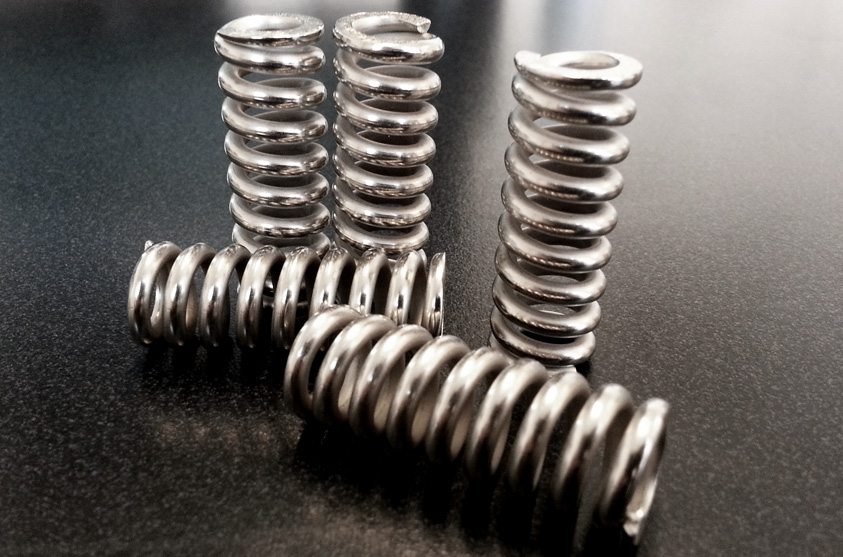
In precision engineering, nickel plating is a treatment applied to certain materials to change their surface properties, such as hardness and resistance to external agents. It is very useful in precision engineering to give machined parts corrosion resistance.
There are two main processes: electroless (chemical) nickel plating and electrolytic nickel plating.
Electroless nickel plating can be carried out on various materials, from metal to glass and plastic. The process deposits nickel without using an electric current, relying instead on a chemical reducing agent in the plating solution, usually sodium hypophosphite. Its main advantage is that the nickel thickness on parts is extremely uniform, even on complex geometries.
Electrolytic nickel plating can only be carried out on metal. The parts are immersed in specific baths and, as an electric current passes through, nickel from pure nickel anodes, arranged according to certain geometric principles, is deposited on them. The corrosion resistance provided by nickel plating depends not only on the thickness of the layer but also on its porosity, brittleness and adhesion.