
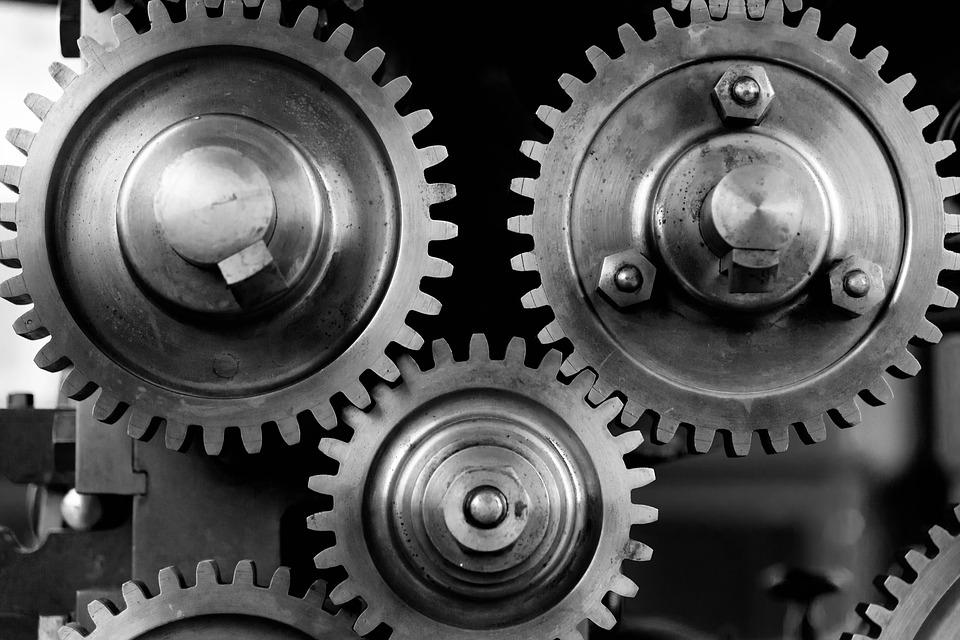
Steel machining, and in particular the machining of alloy and special steels, includes a wide range of techniques used to achieve the required shape, dimensions and properties in precision mechanical components. These materials, known for their superior strength, hardness and durability, require specific expertise and advanced production processes. Our company specialises in the production and machining of custom mechanical components in carbon steels, alloy/special steels, stainless steels, 2000-series aluminium and plastics, for every industry that needs a high degree of customisation.
Properties and applications of alloy and special steels
Alloy and special steels are formulated by adding specific elements (such as nickel, chromium, molybdenum, vanadium and manganese) to improve their mechanical and chemical properties. This makes them ideal where carbon steels would not be enough. Their characteristics include:
- High mechanical strength: the ability to bear heavy loads without deforming.
- Superior hardness: resistance to wear and abrasion, essential for components subject to friction.
- Fatigue resistance: the ability to withstand repeated stress cycles without failing.
- Toughness: resistance to crack propagation, even at low temperatures.
- Resistance to corrosion and oxidation: better than carbon steels, essential in aggressive environments.
These properties make alloy and special steels indispensable in sectors such as aerospace, automotive (engines and transmissions), energy (turbines and nuclear components), tooling and industrial machinery.
Machining techniques
Given their greater hardness and strength, alloy and special steels must be machined with high-precision equipment and qualified staff. The main techniques include:
- Cutting: including laser, plasma and waterjet cutting. These methods give precise, clean cuts even on thick material, minimising thermal distortion.
- Milling: by removing chips with rotating cutters, flat surfaces, slots, holes and complex profiles are produced. It is essential for components with complex geometries and tight tolerances.
- Turning: by rotating the workpiece and feeding the tool, cylindrical, conical or spherical shapes are produced with high dimensional accuracy and surface finish.
- Punching: used to create holes or specific shapes with a punch press, ideal for series production of parts such as brackets and supports.
- Bending: used to bend alloy steel sheet or sections to the required angles or shapes, essential for guards, frames and structures.
- Welding: joins two or more pieces of steel by fusion. Alloy and special steels often require advanced welding techniques (such as TIG and MIG/MAG) and careful parameter control to preserve material properties and prevent defects.
- Grinding: a finishing process that uses an abrasive wheel to achieve extremely smooth surfaces and minimal dimensional tolerances, crucial for precision components that need perfect fits.
- Heat treatments: although not strictly machining, heat treatments (such as hardening, tempering and normalising) are often integrated into the production cycle to set the steel’s final mechanical properties, such as hardness or toughness.
The choice of technique depends on the project’s specific requirements, including shape complexity, required tolerances, production quantities and the desired final properties of the component. Our expertise ensures that the most efficient processes are selected and carried out to produce top-quality components in alloy and special steels. See the materials we machine.