
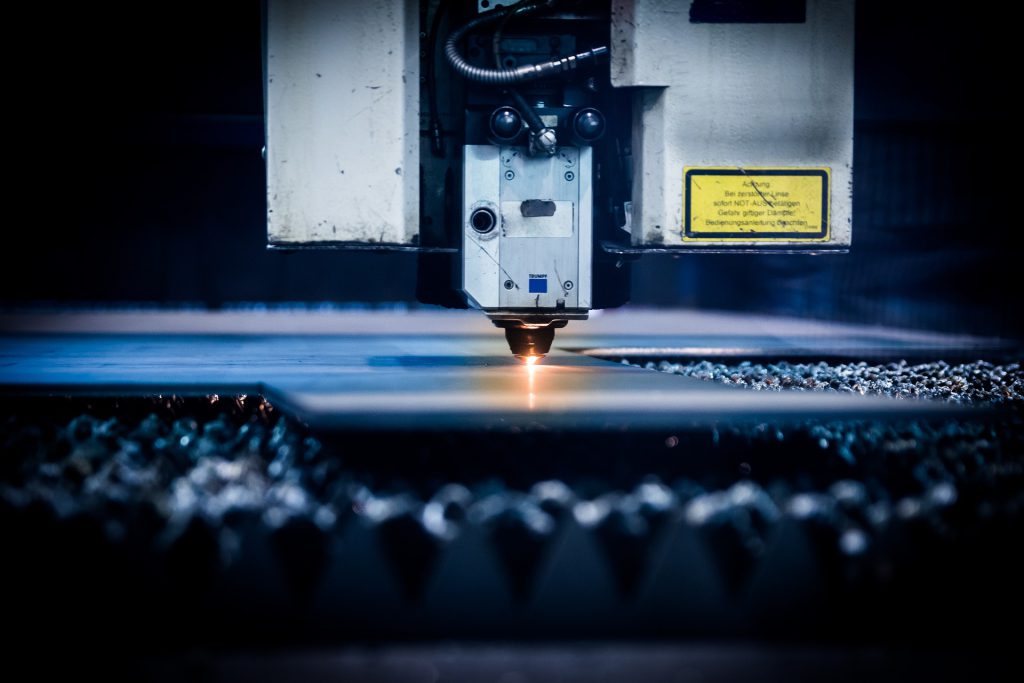
Computer Numerical Control, or CNC, is a control system that coordinates the movements of CNC machine tools along defined paths following the axes. Operator intervention becomes unnecessary, and today most modern machine tools are CNC-controlled and carry out work of extremely high precision.
For example, a CNC machine tool can achieve a precision of a ten-thousandth of a millimetre, practically impossible for the human eye to perceive. Modern CNC machine tools are true 5-axis machining centres with swivelling, tilting heads. This allows the tool to be tilted relative to every working plane, producing complex shapes that traditional manual machining could not achieve. A tilting head also optimises machining relative to the feed plane.
Modern CNC machines are closed-loop: each axis has an encoder that constantly reports the position of the machining head relative to the workpiece. The result is extremely precise work.
The advantages of CNC machines
CNC machining as used in industry today offers several advantages:
- speed;
- precision;
- repeatability;
- adaptability;
- flexibility;
- agility.
Because of these characteristics, CNC machine tools are an essential part of today’s precision engineering industry. CNC lathes, CNC milling machines and other machine tools are standard in the machining centre and ensure high quality standards in industrial production.