
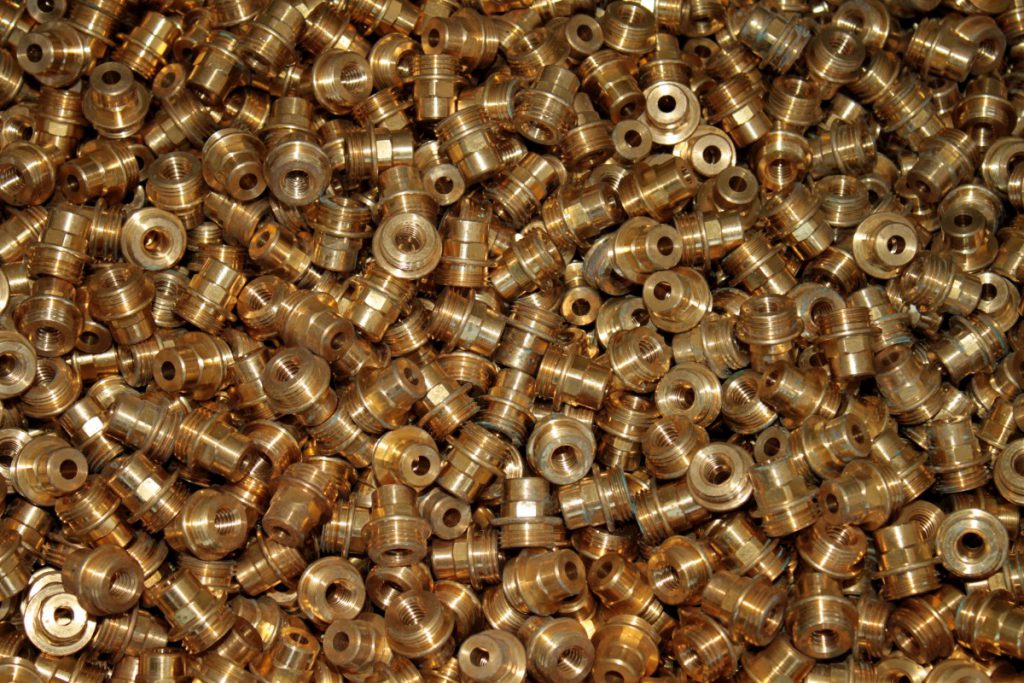
The production of high-quality precision mechanical components is strongly influenced by the strategic use of electroplating, a fundamental process for a precision turning shop because it helps create components tailored to each customer.
Brass in precision engineering
Precision engineering is not limited to carbon steels; it exploits the unique properties of different materials, including brass. This alloy of copper and zinc, sometimes enriched with other elements, offers versatility, excellent mechanical properties and a high-quality appearance.
When should brass be preferred? Brass is the ideal choice for mechanical components that must resist corrosion, tension and wear. Experts use it successfully in a wide range of industries, including automotive, plumbing, medical and hydraulics.
Electroplating brass: optimisation and protection
Electroplating plays a crucial role in adapting the properties of brass to its specific end use. The main goal is to create an additional protective layer that improves the material’s performance, which is particularly important given brass’s tendency to wear due to weathering and frequent use.
Electroplating brass involves aqueous solutions containing bases, metal salts, special additives and other substances. It takes place at room temperature in tanks arranged in sequence. The process includes surface preparation, deposition of the metal coating and finishing. Finally, the components are dried in annealing ovens to prevent moisture spots.
Benefits of electroplating
Through electrochemical deposition, electroplating improves the technical and aesthetic qualities of brass components. The result is a more functional, durable and attractive material. Every electroplating treatment requires care and expertise to ensure high-quality brass components.