
Precision engineering is the branch of mechanical engineering that machines small mechanical components, which is why it is used in so many industries.
Most precision engineering work is now carried out on computerised machines, better known as CNC machines (Computer Numerical Control): machines driven by computer software that allows machining to be programmed while guaranteeing a high level of precision, down to a thousandth of a millimetre.
These machines are now widespread in every sector and cover most of the main precision engineering operations. Let’s look at them in detail.
CNC drilling
Drilling, as the name suggests, makes holes in many materials, from wood to metals. CNC drilling machines in particular work with software that can be programmed to set the rotation speed of the drill, the depth of the hole and other details that make machining extremely precise.
CNC milling
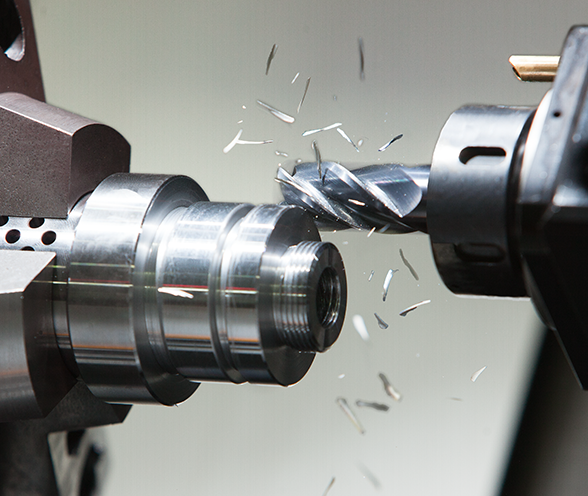
Milling is one of the most common operations in precision engineering. A milling machine can have from 3 to 5 axes, and depending on the number of axes it can produce objects and components of greater or lesser complexity: milling cutters can shape any material, removing excess material from a solid block as the cutter spins at high speed.
CNC turning
Turning works on the opposite principle to drilling and milling: it is the workpiece that rotates, while the cutting tool does not. In this way cylindrical and concave parts can be obtained, again with a high level of precision thanks to computer programming.