
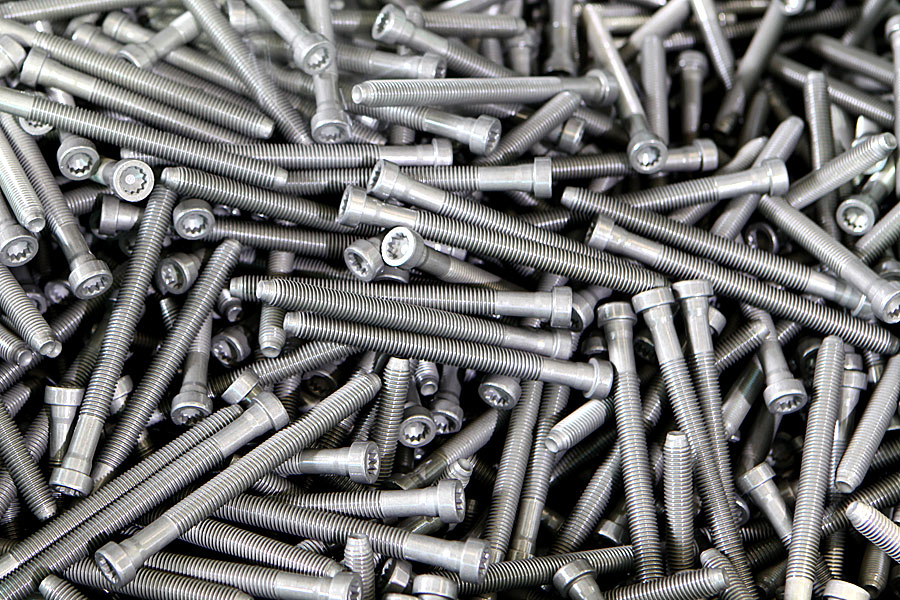
Alongside CNC machining, zinc plating is the process of applying a zinc coating to a metal part to protect it from galvanic corrosion. It is generally applied to steel: because zinc is more electronegative – that is, less noble – than steel, it provides electrochemical protection, also called cathodic protection. It also forms a barrier that isolates the steel from the atmosphere.
Numerically controlled machines are not used for this process itself, which is carried out with conventional methods after CNC machining. There are several forms of zinc plating:
- hot-dip;
- continuous hot-dip;
- electrolytic;
- cold;
- spray.
In hot-dip galvanising, sheets or parts are immersed in tanks of molten zinc at around 450 °C. Continuous hot-dip galvanising works in the same way but is carried out on steel strip or wire, which allows large volumes to be processed.
Electrolytic zinc plating is obtained by immersing the material in an electrolytic solution containing zinc salts. An electric current is then passed through, depositing metallic zinc on the surface of the part.
Cold galvanising is not zinc plating in the strict sense, but is closer to a zinc-rich primer, while spray galvanising involves spraying finely atomised molten zinc onto the steel surface, which has first been blasted to white metal.