
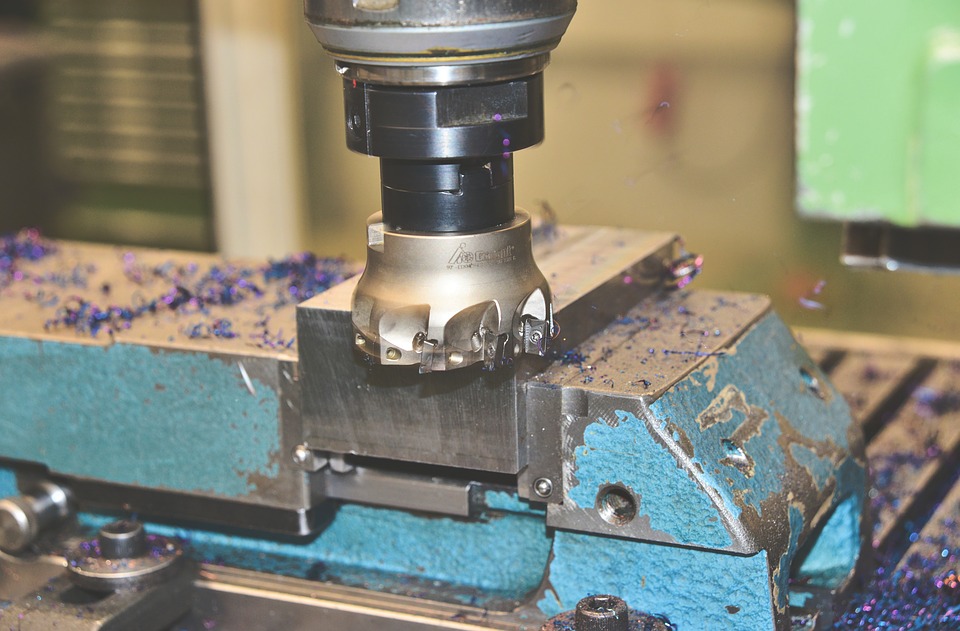
What is a CNC machining centre and how does it work? For anyone in precision engineering the answer is simple: a machining centre is one of the best-known machine tools using numerical control. Its main feature is that it can carry out several machining operations (milling, turning, drilling, boring, etc.) by removing material from a blank with a suitable tool.
Based on the position of the spindle axis, there are different types of machining centre:
- vertical CNC machining centres;
- horizontal CNC machining centres.
In both cases, the spindle is installed on a machine tool. As well as the spindle, CNC machining centres have a self-centring chuck that can clamp square, round or hexagonal parts. Like machining centres, there are also different types of spindle:
- spindle with external motor and three- or four-jaw self-centring chuck;
- non-self-centring spindle with internal motor, also called an electrospindle, used in machining centres for high-speed milling.
CNC working area
The working area is also important in distinguishing the various types of CNC machining centre. Its size determines the spindle’s range of action, and the axis dimensions affect the maximum size of parts and the type of machining possible. T.M.G. operates vertical and horizontal 3- and 4-axis milling centres: see our machinery.