
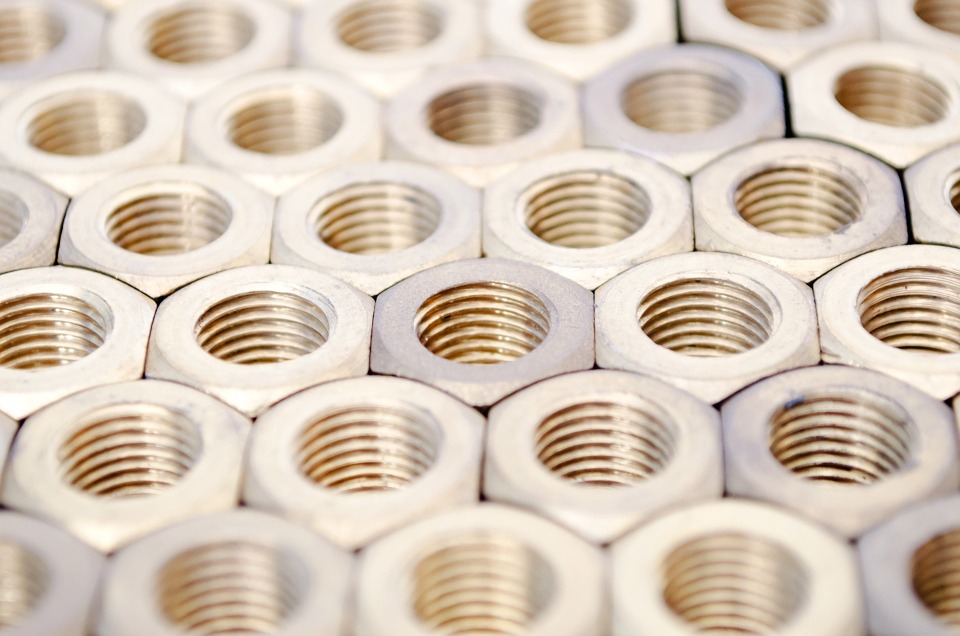
Carbonitriding is a thermochemical metallurgical treatment carried out on steel that makes it much more resistant to wear, even at high temperatures. It is generally used on high-precision steel components, including small ones, that are essential for building equipment used in many industries, from automotive and furniture to agricultural machinery and the medical sector.
Carbonitriding: how it is done
The steel is heated to very high temperatures, between 721 and 910 °C, and then exposed to a gas or liquid mixture rich in carbon and nitrogen, so that these elements “penetrate” the metallurgical structure of the steel. This creates a surface layer of variable thickness, between 0.05 and 0.80 mm, that is highly hardenable; it can then be hardened so that the steel is resistant on the surface while keeping a tough core that retains all the typical properties of the metal.
The steels suited to, and requiring, this type of treatment are:
- Low-carbon steels
- Carbon steels
- High-speed steels
Carbonitriding should be preceded by a stress-relieving treatment; it takes around 3–4 hours and must be carried out by a skilled operator in a precision machine shop.
The benefits of this treatment are many:
- It does not distort steel parts and components
- It ensures greater resistance even at high temperatures
- It makes steel components resistant to dry wear
For these reasons carbonitriding is often preferred to carburising.