
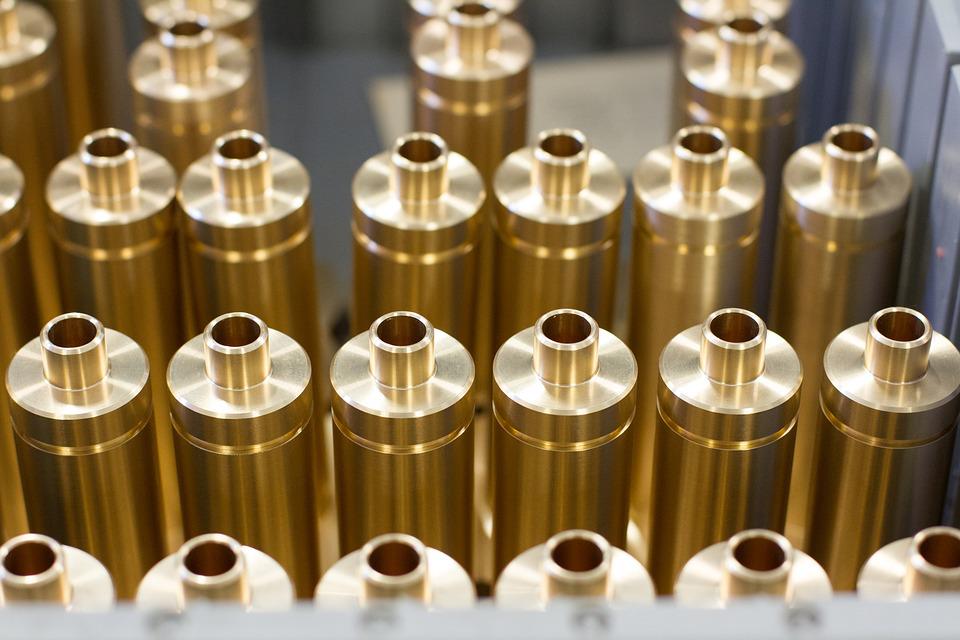
“Steel = mechanical components” is the best-known association, but not the only one in precision machining. When does it make sense to produce brass mechanical parts?
Steel (carbon, alloy and stainless) is the most obvious choice for high-precision mechanical parts. However, there are other high-performance materials to consider. Among the most valued materials for precision components is brass, both CuZn39Pb3 and CuZn40Pb2.
Why choose brass mechanical parts?
Why choose brass parts? The first thing to consider is the set of properties that make brass unique in machining. Essentially, it is a very versatile alloy with formidable mechanical properties and attractive aesthetic qualities.
Its mechanical properties include strong corrosion resistance, high conductivity and great ductility. When electroplated or painted to create a protective layer and a striking finish, brass can even be considered a design material.
The mechanical and aesthetic properties of brass allow it to be used for components in any industry (e.g. valves for industrial plants). Brass parts are particularly useful wherever components must resist tension, corrosion and damage; in short, they must last.
Producing brass mechanical components
Producing brass components is not simple and requires knowledge, technique and high-tech machinery. In practice, it is the preserve of the best companies in precision machining.
Although ductile and extremely machinable, brass has considerable mechanical and cohesive strength, which produces long, tough chips and makes it difficult to machine. The risk is jamming the machine and lowering the quality of the part. In addition, the heat generated by machining can damage the surface qualities of brass, reducing its quality. For this reason, in line with project specifications and customer needs, certain elements can be added to overcome this problem without spoiling the part. One example is lead.
Problems with machining brass can also be overcome by adjusting cutting speeds and methods. Precise, high-quality machining of brass parts is only possible if the producer has the latest machinery, surface and heat treatments, complementary services and skilled professionals.