
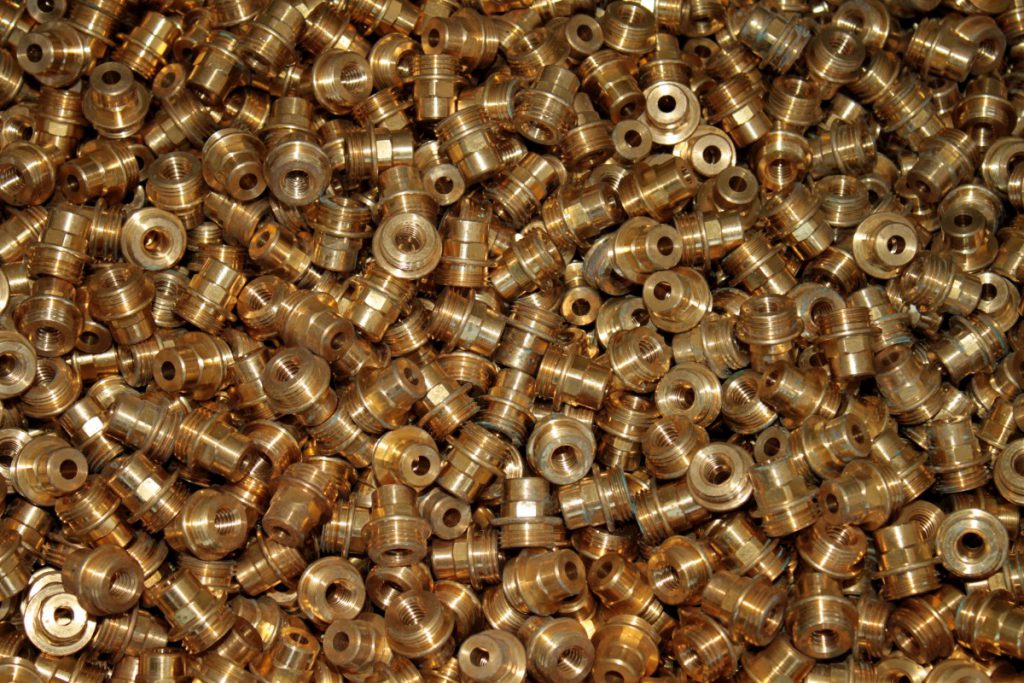
The production of high-precision, high-quality mechanical components depends significantly on the strategic use of electroplating. These processes are fundamental for a precision turning shop, because they improve the technical and aesthetic properties of components, providing custom solutions for every industrial need.
The use of brass in precision engineering
Precision engineering is not limited to machining carbon steels; it also uses materials such as brass, an alloy of copper and zinc with excellent mechanical properties and a refined appearance. Brass is particularly suitable for components that must resist corrosion, tension and wear. Thanks to these qualities, it is used in sectors such as automotive, medical, plumbing and hydraulics.
Electroplating brass: benefits and processes
Electroplating is essential for optimising the performance of brass and adapting it to specific applications. Its main purpose is to create a protective layer that increases resistance to weathering and wear in use.
Brass electroplating takes place in a sequence of tanks at room temperature and involves several stages:
- Surface preparation, to ensure optimal adhesion of the coating.
- Electrochemical deposition, using aqueous solutions containing bases, metal salts and special additives.
- Finishing and drying, with passes through annealing ovens to prevent moisture residues.
Thanks to these treatments, brass components gain greater strength and durability, as well as a superior appearance. The quality of the result depends on the accuracy of the process and the skill of the operators, both essential for high-performance products.