
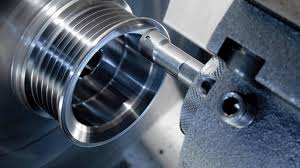
Boring is an essential precision machining operation for producing perfectly finished, dimensionally accurate holes. In this article we look at what boring is, how it works and what to do to maximise quality and accuracy.
What is boring?
Boring is a finishing operation carried out on an existing hole to improve its roundness, dimensional tolerance and surface finish. It uses a tool called a reamer or boring tool, which can be manual or mounted on CNC machines.
When is boring used?
Boring is used when a hole must meet very tight tolerances, for example in components intended for mechanical, hydraulic or pneumatic assemblies. It is common in high-precision sectors such as automotive and aerospace.
Types of boring
– Rough boring;
– Finish boring;
– Through or blind boring;
– Boring with adjustable or fixed-head tools.
Factors that affect accuracy
– Quality of the boring tool;
– Correct speed and feed;
– Lubrication control;
– Rigidity of the machine–workpiece system;
– In-process dimensional checks.
Advantages of boring
– High dimensional accuracy;
– Smooth, uniform surfaces;
– Ability to correct small errors in pre-drilled holes;
– Compatibility with automated CNC machining.
Boring is a crucial step in achieving excellent results in precision engineering. Relying on experienced technicians and quality tools is essential to guarantee tight tolerances and maximum reliability.
📞 Contact T.M.G. for precision machining tailored to your company.