
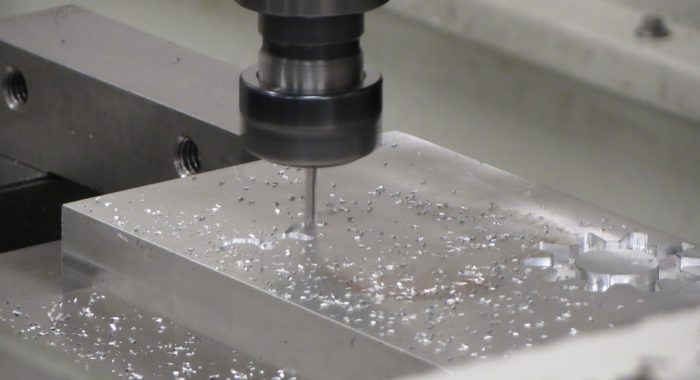
A CNC milling machine is a machine with a built-in computerised control centre that guarantees precision machining. Milling can shape flat or complex forms in parts made from a variety of materials.
One of these is aluminium, but before looking at how aluminium CNC machining works, it is worth explaining how the milling process is structured. Essentially, a cutting tool mounted on a spindle rotates while the motorised axes move at the same time. Qualified companies know which cutters to use for each material. Now let’s see how aluminium CNC machining is done.
Aluminium CNC machining: guidelines
When we talk about aluminium we are referring to several materials: not only pure aluminium, but also alloys containing copper, zinc and magnesium. Their machinability varies according to how much silicon they contain; the most common content is below 13%.
When machining this type of aluminium, bear in mind that built-up edge and material sticking to the cutting edges can cause burrs and surface finish problems. Chips must also be formed and evacuated correctly to avoid scratches on the surface.
It is advisable to use cutting fluid to prevent material sticking to the insert edges; this also improves surface finish. Another important aspect is cutting speed: a higher speed is generally better, as it improves cutting-edge performance. Finally, make sure the cutter’s maximum rpm is never exceeded.