
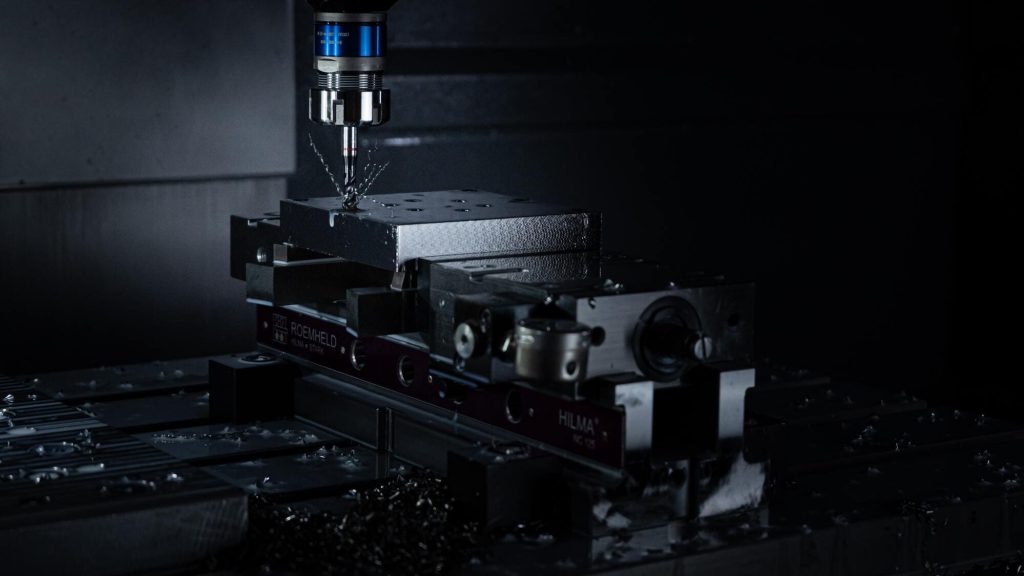
CNC machines use computerised machining to increase efficiency in the workplace.
These tools are rapidly becoming a popular resource for producing complex parts in many sectors, including marine, aerospace, automotive and medical. This is due to the many advantages of CNC machines over traditional methods.
Advantages of CNC machining
CNC machines have many advantages over conventional machining: they use higher levels of automation and reduce possible errors. Let’s look at the main advantages of CNC machines.
- Productivity – Because a CNC milling machine or other machine can be programmed to carry out a complex series of actions, operators can often step away while it works. In certain set-ups this can include automated out-of-hours machining, greatly increasing productivity and production speed. This particularly benefits precision engineers running several CNC centres.
- Consistency – Because CNC almost entirely eliminates human error, CNC machines are highly accurate, giving customers uniform, flawless products. This is what makes CNC machining so crucial where quality is paramount, as the reliability and quality of the work are much higher.
- Cost-effectiveness – CNC machines more than offset their initial cost with high output and fewer defective parts. Operators also need less training and can learn to use the machine in a virtual environment, removing the need for training on real parts.
- Safety – Any hazardous problem, such as a jam or other machining error, only harms the machine and is not a safety issue for the operator, unlike traditional machines.
- Versatility – CNC machines can be reprogrammed quickly to produce a completely new product, making them ideal for short or long production runs. Programming can be changed without excessive time or cost.