
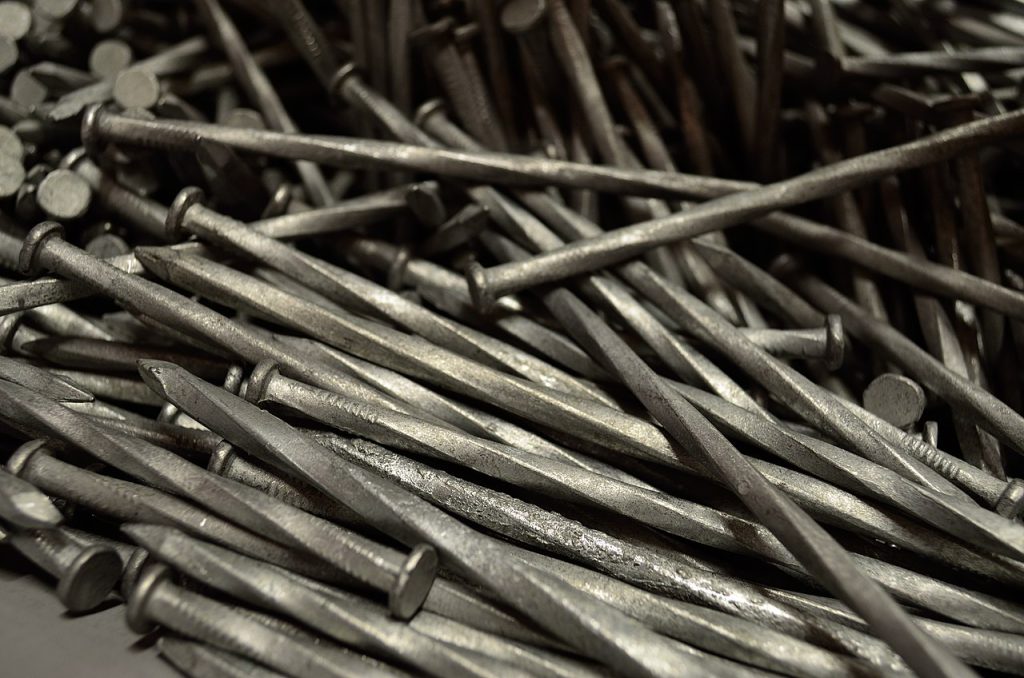
Mechanical zinc plating, also known as sherardizing, is a process widely used in many industries, especially for small assembly parts such as screws, nails and washers.
Unlike electrolytic processes, mechanical zinc plating is a mechanical process that “coats” parts with a layer of zinc, making them corrosion-resistant and free from hydrogen embrittlement. Let’s look in detail at how mechanical zinc plating works.
Mechanical zinc plating: how it works
The parts to be plated – as mentioned, generally small assembly parts – are tumbled inside a rotating drum heated to high temperature.
The zinc plating machine is essentially a kind of cement mixer, with an internal temperature of between 320 and 400 °C, into which zinc powder (in a proportion of 20–25%) and an inert filler such as white sand are added to produce the zinc coating.
As they tumble inside the drum, the rotating movement and the high temperatures give the parts an anti-corrosion coating through thermal diffusion of the zinc.
Parts that have undergone mechanical zinc plating can then be treated with zinc phosphate to obtain a clean surface.
There are three classes of mechanical zinc plating, depending on the thickness of the zinc coating and therefore its corrosion resistance: from 5–10 micrometres for the first class, to 10–30 micrometres for the second, and over 30 micrometres for the third.