
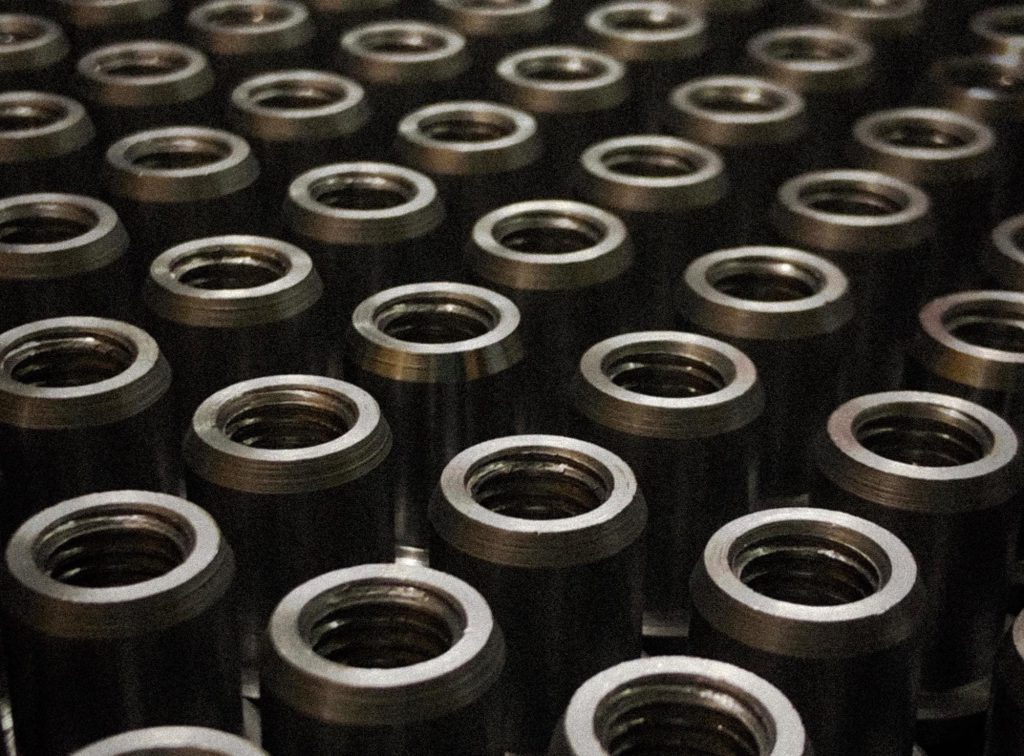
Time passes and technology moves on. And as it does, machines change their shape, appearance and purpose. While 3D printers work by addition, the CNC milling machine works by subtraction, carving the chosen design, input or project into the material.
A CNC milling machine can machine complex, hard materials that are difficult to modify, because CNC technology goes where the laser stops and cannot reach. A perfectly clean cut is not possible, but it isn’t what is asked of it: a CNC mill is expected to work through really large quantities of material – and to do it in the shortest possible time.
Working by subtraction with CNC machines
CNC machining allows relatively fast work on relatively large quantities of material. These machines work well on a wide range of materials, from aluminium to Plexiglas, as well as glass, plastics, wood and many derivatives. Working by subtraction rather than addition, as we said: a 3D printer works with liquid materials and turns them solid during the process, while a CNC mill works with solid stock and removes excess material, pass after pass, until the part reaches the desired size and shape.
The precision of CNC machining
Thanks to numerical control, precision in both the quantity and type of work is extreme, because everything is managed and controlled by integrated software that gives the machine exact instructions – leaving no room for error or approximation. The CNC milling machine is therefore a very high-precision machine, perfect for producing large quantities of parts in very little time without ever sacrificing accuracy.