
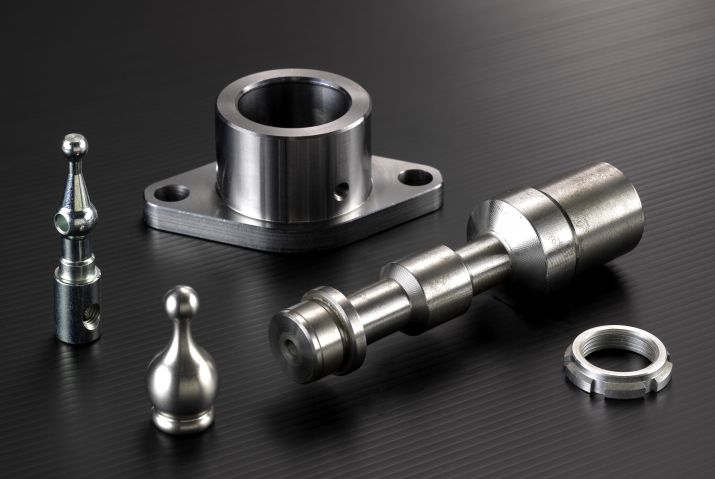
Many production processes require parts of specific dimensions that can only be obtained by precision milling. This type of operation is essential where machining with a very low margin of error is required.
Milling plays an increasingly important role in precision engineering companies. Today it is used to produce complex shapes (not necessarily symmetrical), slots, three-dimensional profiles, flat surfaces, shoulders and holes.
Precision milling for custom parts
The latest machines show their full effectiveness in meeting ever more specific needs, particularly geometries that make machine work indispensable. These are usually CNC machines used to produce custom parts. That is why there are many types of milling cutters: face, staggered-tooth, helical, double-angle, end mills and more.
Precision milling requires minimal intervention from the operator, since the system is almost fully automated. This shows how capable these machines are at delivering perfect results.
Applications of precision milling
Precision milling is needed for highly complex shapes or those with alternating holes, through holes and cavities. The operation uses the rotation of a tool with several cutting edges, in several passes.
The most commonly used milling operations include:
- Chamfer milling;
- End milling;
- Face milling;
- Roughing;
- Finishing.
Milling also shows its advantages in secondary operations on semi-finished parts, which sometimes need additional, finer features.