
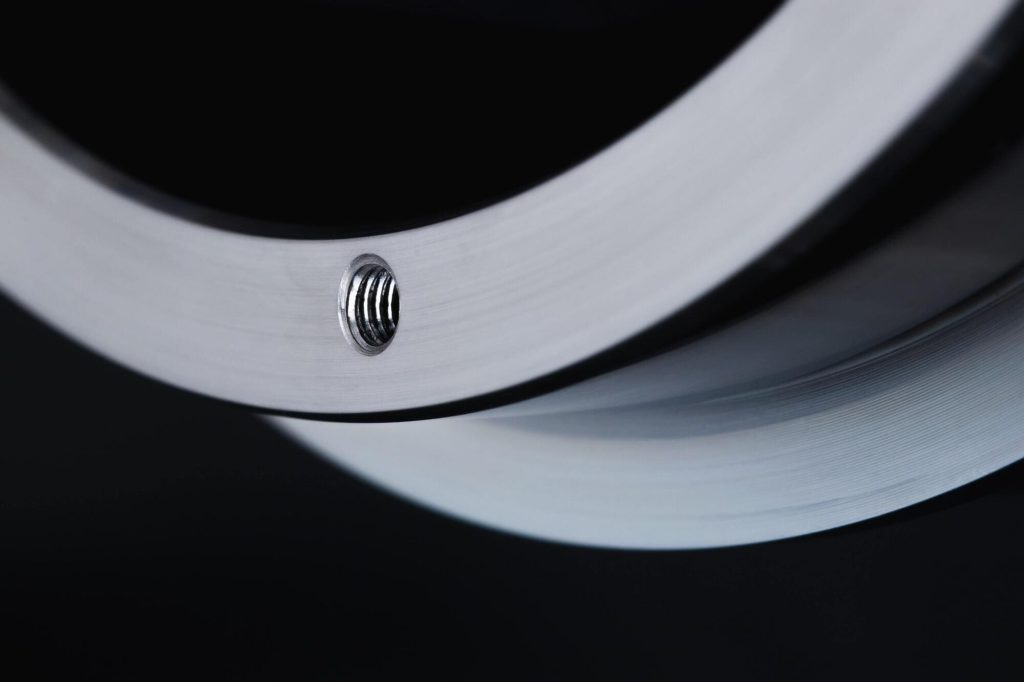
Precision turning removes part of the material to obtain surfaces of different shapes, sizes and types. Turning can produce conical, spherical or cylindrical products, depending on specific needs.
What does precision turning involve?
As the name suggests, turning machines a material that rotates against a tool, which in turn moves along a curved or straight path, depending on the type of cut required.
During these combined movements, the cutting edge penetrates the material and removes the excess, which becomes machining waste. Once the chips have been removed, the machined material is ready for finishing.
Precision turning can also be carried out on CNC machines, which use computerised technology to automate a given operation, especially when large numbers of parts are involved.
Why does machinery matter so much?
Machinery is very important in precision turning. Precision, because the work is extremely specific, involves large quantities and often very small parts. The more precise the machining, the more likely it is that finishing operations can be avoided or reduced.
For a company carrying out this type of work, it is therefore very important to invest in quality machinery, to guarantee customers high quality standards. Discover our CNC lathes.