
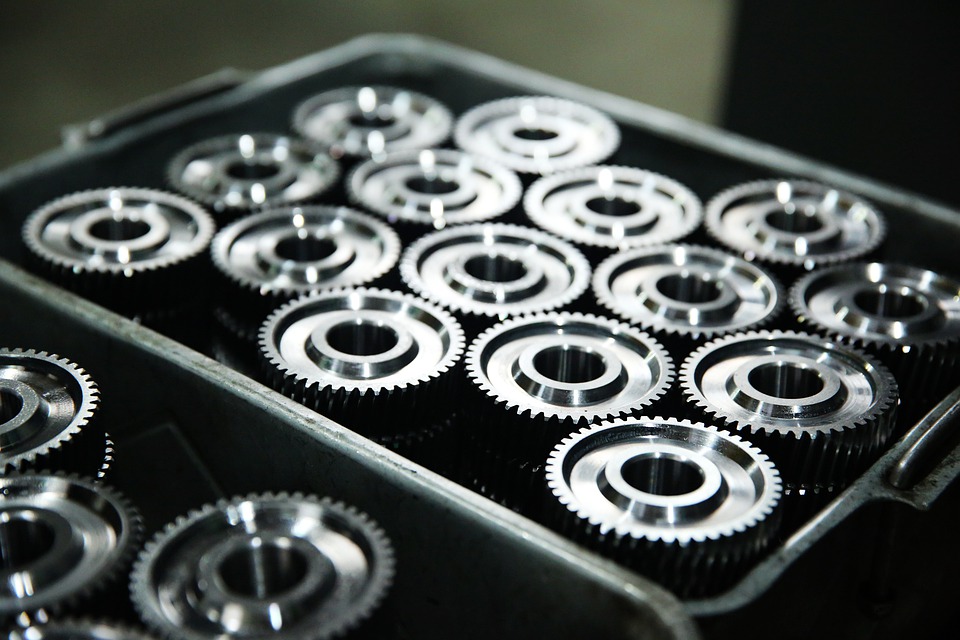
Heat treatments transform the structure of certain materials to change their mechanical and technological properties. Induction hardening aims to increase the surface hardness of mechanical components in steel, cast iron or other alloys.
This treatment extends the average life of gears, gear wheels and, more generally, any mechanical part, even when it is destined for heavy-duty work.
Why choose induction hardening?
This induction heat treatment is not the only one that changes the surface of steel or alloys to make it more resistant to fatigue and wear. However, compared with other heat treatments such as nitriding, the speed of the process significantly reduces the energy needed to achieve the same hardness. Because the material reaches the required temperature and is cooled quickly, distortion of the part and cracking in thinner sections are also greatly reduced.
In addition, advanced equipment allows hardening to be carried out repeatably and precisely, so there are no discrepancies between parts in a batch.
Induction hardening: how it works
Induction hardening involves heating a metal or alloy to a specific temperature, holding it there and cooling it rapidly. What gives the material its new mechanical strength and preserves the surface transformation is the speed of cooling with liquids (e.g. oil, water or emulsion). That is the secret: the step must be fast and controlled to obtain a martensitic transformation and avoid unexpected changes. After cooling, the surface-hardened material is treated further to achieve the desired result.
Applications of induction hardening
The treatment can harden a whole surface or selected areas of it. Where is induction hardening used? In the automotive sector, it is used to produce crankshafts, dies for bonnets, doors and panels, and bolts.
Induction hardening is used for components in special rail and marine applications. It is also used in aviation and metallurgy, as well as in the food industry, the paper sector and many others.