
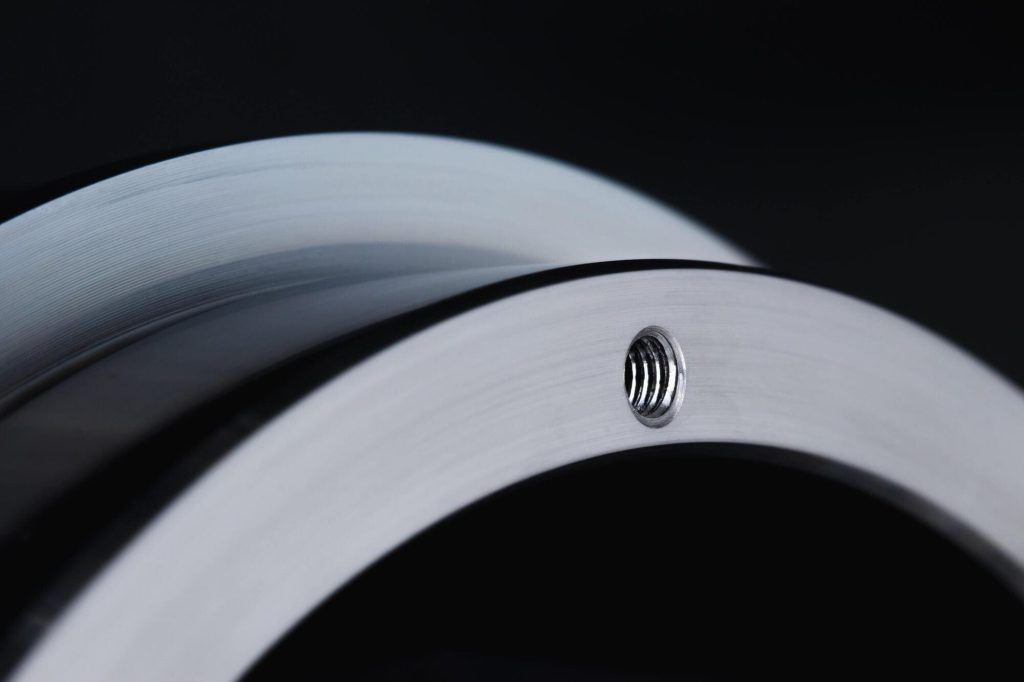
Precision engineering works metals and metal alloys to turn raw material into a finished product. Choosing materials for a given application requires careful assessment of how well they can be cut, shaped and finished. It is also good practice to choose the best material before turning it into the desired final product.
When assessing a material’s machinability, factors such as hardness, thermal and electrical conductivity and malleability must also be considered before making fittings, exchangers, valves or pumps. Each metal has specific advantages depending on the product required.
The metals most commonly machined include:
- Aluminium
- Copper
- Brass
- Stainless steel
Let’s look at the properties that make the metals used in precision engineering special.
The most widely used metals in precision engineering
Aluminium is an extremely strong material that responds very well to cutting, drilling, punching and milling. It requires less effort to machine than other metals. Thanks to its high machinability, it is used to produce tube stems, machine parts and filters.
Brass is an alloy of zinc and copper known for its golden appearance and good machinability. It has a low melting point, excellent malleability and outstanding resistance to corrosion and oxidation. Brass is used for valves, bearings and electrical devices, as well as various precision parts for the marine sector.
Copper is a natural metal with excellent conductive properties. In precision engineering it is used for products such as radiators, generators, connectors and heat exchangers, because it conducts heat very well, resists rust and offers the best electrical conductivity of all machinable metals.
Finally, stainless steel is ideal for many applications, such as medical devices, industrial equipment and components for aerospace or automotive. This is because it is more resistant to rust and corrosion than other steels thanks to a protective layer of inert oxide formed by a specific chemical process. It is an alloy of iron and chromium, which bonds with oxygen to form solid chromium oxide on the steel’s surface. This does mean, however, that stainless steel has a limited ability to resist scratches and abrasion.