
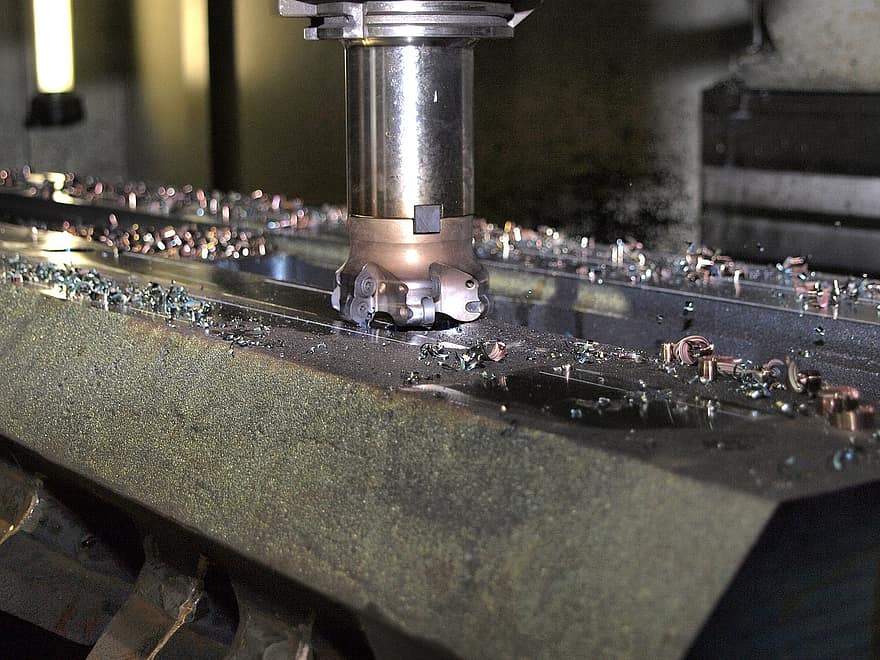
CNC (Computer Numerical Control) milling machines are remarkable machines that have revolutionised the metalworking industry. In particular, the CNC milling machine for metals has opened up new opportunities for precision turning shops that produce mechanical components to each customer’s specific order.
This automated machine uses a computer to control the movement of a rotating tool. This makes it possible to make precise cuts in metals, including steel, aluminium, brass and many others. The main difference between a CNC milling machine and a traditional manual one is the automation and precision the former offers.
CNC milling machines for metals: applications
What operations can a milling machine perform? CNC milling machines for metals are widely used in precision turning shops to meet customers’ specific needs. They can carry out a wide range of operations with extreme precision, including:
- Face milling: producing smooth, precise surfaces on mechanical components, essential when a flawless finish is required.
- Drilling: holes of different sizes can be made with extreme precision, ensuring perfectly aligned holes.
- Engraving and slotting: the machine can be programmed to create detailed engravings and slots in metal, often required for decorative or functional purposes.
- Cutting complex profiles: one of the most impressive features of CNC milling machines is their ability to cut complex profiles with extreme precision, essential for custom components with intricate shapes.
- Threading: the machine can also create precise threads on metal components.
- Trimming: edges can be trimmed to ensure they are uniform and burr-free.
It is clear, then, that the CNC milling machine for metals is an invaluable resource for precision turning shops producing made-to-order components. With its ability to machine a variety of metals precisely, it offers unmatched efficiency and accuracy. Discover our milling centres.