
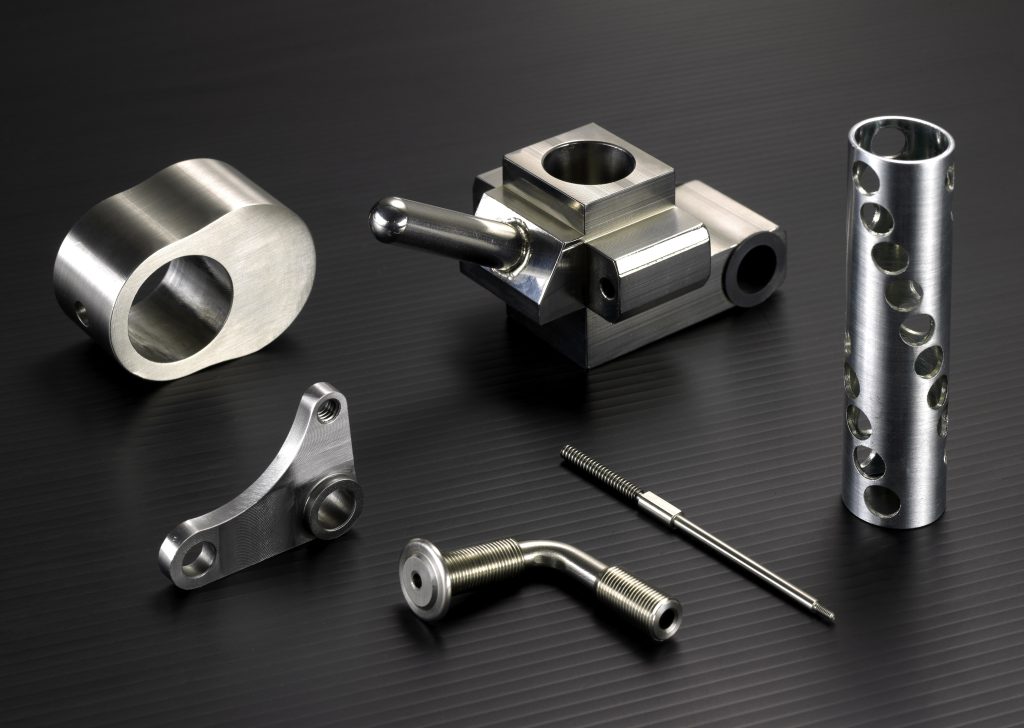
Aluminium is one of the most widely used materials for high-quality mechanical components in precision engineering. But how are aluminium alloys selected?
In precision engineering, materials are chosen according to how well they meet the technical drawing specifications and intended use. It would be limiting to think only of steel (carbon and special), because other materials perform better in certain contexts. Among the materials most used for precision parts is aluminium, or more precisely, aluminium alloys.
Properties of aluminium and its alloys
Aluminium is a light metal (2.70 kg/dm³) that is also strong. Its typical colour comes from the way its surface behaves in contact with air, which prevents oxidation and corrosion. The material is particularly malleable and weldable, with high electrical and thermal conductivity.
Compared with steel, aluminium has a lower yield strength (the point at which it deforms permanently), but thanks to its lower density it can achieve high strength without adding weight. Its ability to combine with other elements allows its composition to be modified, creating aluminium alloys with different properties.
Classification of aluminium alloys
Light alloys are divided into series based on the composition of aluminium and another element. The main ones are:
- 1000 series: mainly pure aluminium (99%), offering high conductivity, corrosion resistance and workability.
- 2000 series: also known as Duralumin or Avional, light and strong, and heat-treatable to increase mechanical strength. Made by combining aluminium and copper.
- 3000 series: aluminium combined with manganese gives a series with high mechanical strength but limited ductility.
- 4000 series: contains aluminium and silicon, with particular wear resistance.
- 5000 series: aluminium and magnesium form the Peraluman series, characterised by ductility, weldability and resistance to melting and corrosion.
- 6000 series: aluminium, silicon and magnesium form the Anticorodal series, offering machinability, weldability, mechanical strength and corrosion resistance.
- 7000 series: commonly known as Ergal, a combination of aluminium, zinc and magnesium that is light, machinable and resistant to load and corrosion, though with limited weldability.
Ergal is the strongest aluminium alloy, but that does not make it the best choice for every industry. Precision engineering selects aluminium alloys based on their mechanical properties and specific application. For example, 99% pure aluminium alloys are preferred for heat exchangers and chemical plants, while aerospace uses Avional for its strength-to-weight ratio. Each series has its ideal application, such as 6000-series alloys in the cycling, motorcycle and rail sectors. Similarly, Ergal can be used in both aerospace and aviation.