
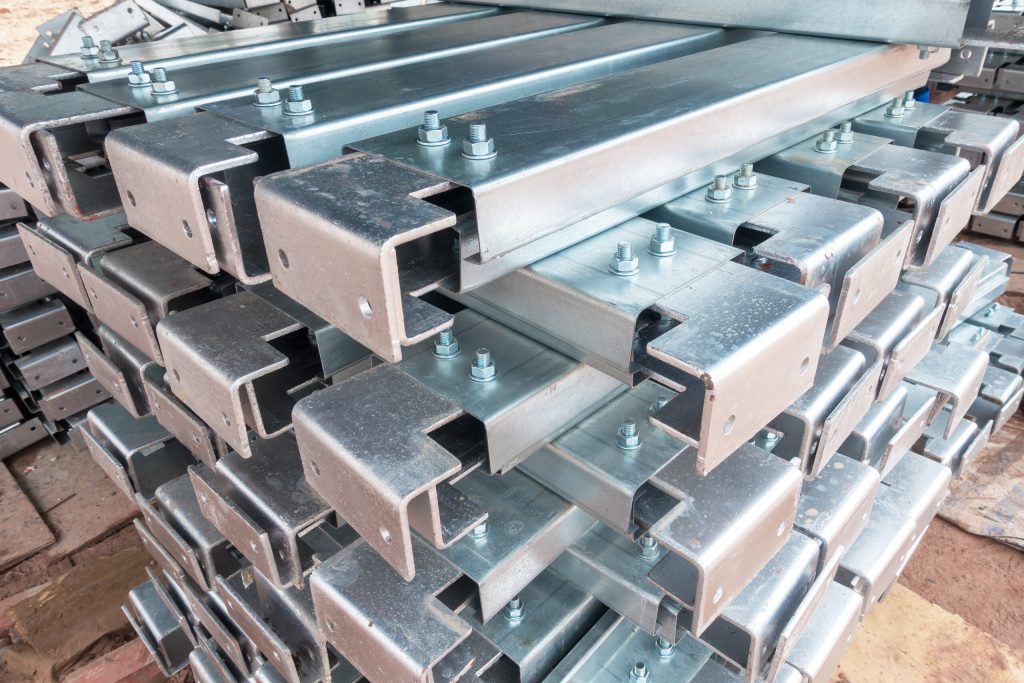
Corrosion is the number one enemy of industrial metal components. Among the surface treatments available, hot-dip galvanising remains one of the most effective and economical ways to give steel exceptional durability, even in the harshest environments.
But how exactly does it work, and when is it the right choice for your mechanical components?
The galvanising process
Hot-dip galvanising involves immersing steel parts in a bath of molten zinc at around 450°C. It is not simply a “coating”: at this temperature a metallurgical reaction takes place. The zinc bonds with the steel to form an extremely resistant intermetallic alloy, topped by a layer of pure zinc.
The 3 main advantages
- Cathodic protection (the “sacrificial” effect)
Unlike paint, which only creates a physical barrier, zinc actively protects the steel. Even if the coating is scratched and the underlying metal is exposed, the surrounding zinc will oxidise instead of the steel, preventing rust from forming underneath the coating.
- Complete coverage
Because it is an immersion process, hot-dip galvanising also reaches internal surfaces, hidden corners and the inside of tubes, areas that are impossible to protect properly with spray painting.
- Mechanical resistance
The iron-zinc alloy formed on the surface is harder than the base steel, offering excellent resistance to impact and abrasion during assembly or transport.
T.M.G.: complete management of your component
Our customers often need the finished part, ready for assembly. Although galvanising is a specialist process carried out externally, T.M.G. manages the entire supply chain. We work with certified surface treatment partners and deliver the component machined, galvanised and inspected, reducing your logistics workload.
From CNC machining to final protection: rely on us for a turnkey service.